How to See Bangkok's Best Temples in One Day — Route, Tips and Transport
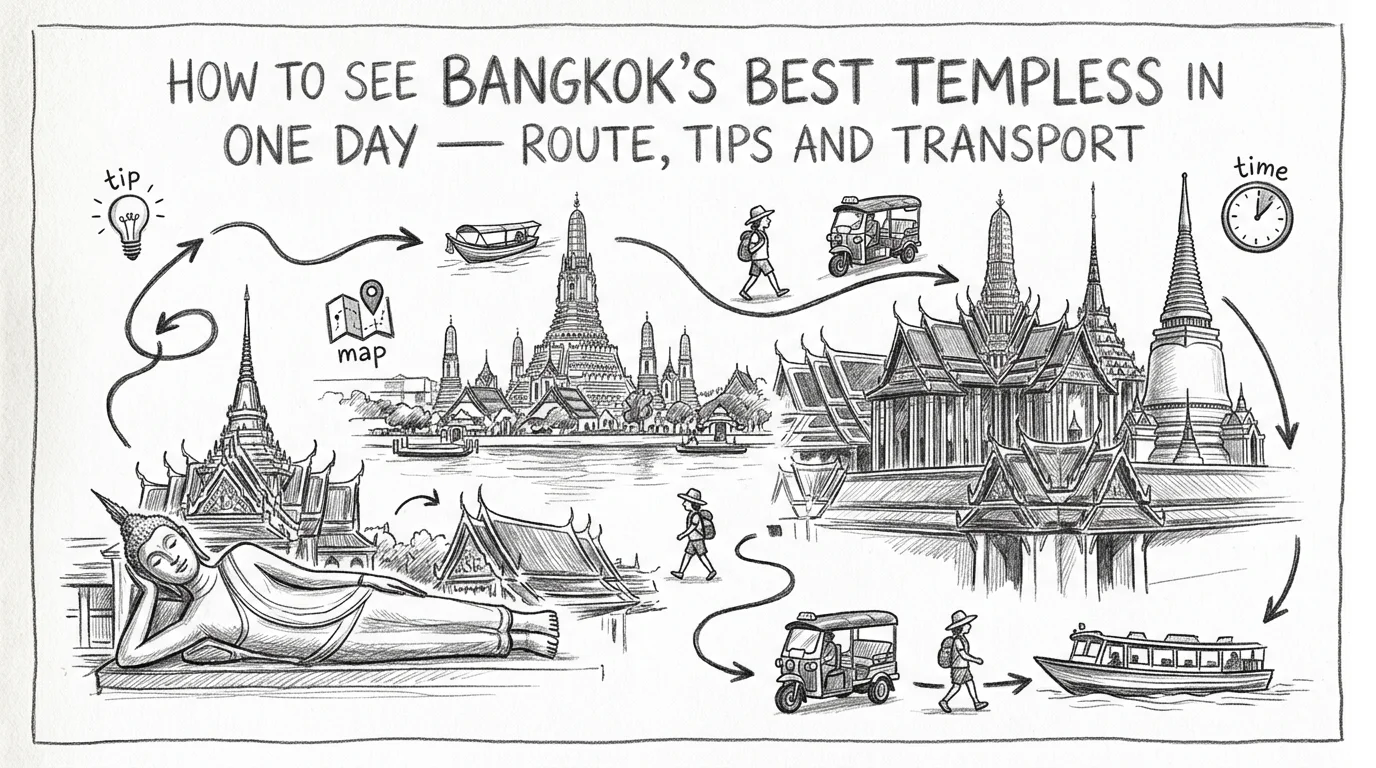
Bangkok has more royal Buddhist temples than most cities have parks. Seeing all of them in a single day is not realistic — but seeing the best of them, unhurried and without a taxi queue in sight, is entirely possible if you plan the route around the city's waterways and rail network rather than its roads.
This is the route we use. It starts early, ends at dusk, and covers more ground than most organised tours manage in twice the time.
Before You Go
One thing worth reading before any temple visit in Bangkok: our guide to Thai temple etiquette covers dress code, behaviour, photography and everything else you need to know to visit respectfully and comfortably.
The short version — shoulders and knees covered, shoes off at the entrance, feet never pointed at a Buddha image — but the full guide explains the logic behind the rules rather than just listing them. Read it here: How to Visit a Buddhist Temple in Thailand.
Bangkok's historic temple district is compact and walkable once you are in it. The challenge is getting there — and that is where most visitors lose time. Roads in Bangkok, particularly around the Grand Palace area, can move slowly at almost any hour. The river and the BTS Skytrain do not have that problem.
Getting Around — Skip the Taxi
For this route, you need two things: an MRT or BTS card loaded with enough for a few journeys, and access to the Chao Phraya Express Boat. Both are inexpensive and reliable in ways that road transport in Bangkok cannot always claim to be.
The Chao Phraya Express Boat runs along the river between piers that sit directly beside several of the most important temples. A single journey costs between 15 and 40 baht depending on the service. It also offers a perspective on Bangkok that no road journey can — approaching Wat Arun from the river at the right light is one of the city's genuinely memorable experiences.
For longer distances — getting from the river district to Wat Benchamabophit or Wat Pathum Wanaram — the BTS Skytrain and MRT are faster and more comfortable than any surface vehicle. Plan your route around the Tha Chang, Tha Tien and Saphan Taksin piers for the river section, and Ratchathewi or Siam stations for the northern and central temples.
The Route
Start early — by 8:00 AM if possible. Bangkok's temple district is significantly more pleasant in the morning than at midday, and some of the best light falls in the first two hours after sunrise.
Morning — The Historic Island
Begin at Wat Phra Kaew and the Grand Palace complex. Arrive as close to the 8:30 AM opening as possible — the crowds build quickly after 9:30 AM and the complex becomes significantly more congested by late morning. Allow 90 minutes minimum. The scale of the complex is easy to underestimate from photographs.
From Wat Phra Kaew, walk south through the Grand Palace grounds and exit toward Tha Chang pier. From here, cross to Wat Pho on foot — it is a five-minute walk along the river road. Wat Pho opens at 8:00 AM and the Reclining Buddha hall is best seen before the main tour group arrivals. Allow an hour.
From Tha Tien pier beside Wat Pho, take the cross-river ferry to Wat Arun on the Thonburi bank. The crossing takes three minutes and costs 5 baht. Wat Arun is best seen from the outside and from the riverside — the porcelain surface of the prang is the thing to look at closely, and the views back across the river to Wat Pho are exceptional. Allow 45 minutes.
Midday — A Pause
By now it is likely around noon and the temperature is at its peak. This is the right moment to stop rather than push through. Find shade in the temple grounds or cross back to the Tha Tien area where there are small restaurants and cafes near the pier. Thai food in this neighbourhood is good and inexpensive. Rest for an hour.
The afternoon heat in Bangkok is real and it varies significantly by season. Between March and May temperatures regularly exceed 38 degrees by midday. Between November and February the same route is comfortable at almost any hour. Pace yourself accordingly — temples are not going anywhere, and visiting them while overheated is not the experience they deserve.
Afternoon — North and East
After lunch, take the river boat north to Tha Phra Athit pier, a short walk from Wat Bowonniwet in Banglamphu. This is the temple where every Thai king since Rama IV has been ordained — quieter than the Grand Palace temples, with remarkable murals and almost no tourist infrastructure. Allow 30 minutes.
A short walk east brings you to Wat Ratchanatdaram and the Loha Prasat — one of only three Metal Castles ever built in the world, 37 iron spires representing 37 Buddhist virtues. Combined with the neighbouring Wat Saket and its Golden Mount, this area makes for 90 minutes of exploration that most Bangkok visitors entirely skip.
Climb the Golden Mount at Wat Saket — 318 steps — for the best panoramic view of the old city available at ground level. The effort is worth it at any temperature and the descent through frangipani gardens is pleasant.
Late Afternoon — Dusit
From Wat Saket, take the MRT or a short taxi ride north to Wat Benchamabophit — the Marble Temple. This is the right temple for late afternoon. The Carrara marble surfaces catch the light differently as the sun moves west, and by 4:00 PM the main crowds have thinned. The rear courtyard with its 52 bronze Buddha images is the part most visitors rush past. Do not.
What to Skip
This route deliberately leaves out several temples that appear on most tourist itineraries. Wat Suthat and Wat Mahathat are both significant and worth visiting — but on a one-day route they require detours that break the logic of the itinerary. Save them for a second day or a dedicated morning.
Full documentation for every temple in this itinerary — history, architecture, GPS coordinates and visitor information — is available in the Thai Temple Archive:
Wat Phra Kaew — thaitemplearchive.org/temples/wat-phra-kaew
Wat Pho — thaitemplearchive.org/temples/wat-pho
Wat Arun — thaitemplearchive.org/temples/wat-arun
Wat Bowonniwet — thaitemplearchive.org/temples/wat-bowonniwet-vihara
Wat Ratchanatdaram — thaitemplearchive.org/temples/wat-ratchanatdaram
Wat Saket — thaitemplearchive.org/temples/wat-saket
Wat Benchamabophit — thaitemplearchive.org/temples/wat-benchamabophit
Approaching Wat Arun from the river at the right light is one of Bangkok's genuinely memorable experiences — and the ferry costs 5 baht.