Wat Pa vs. Wat Ban: Understanding the Thai Forest Tradition
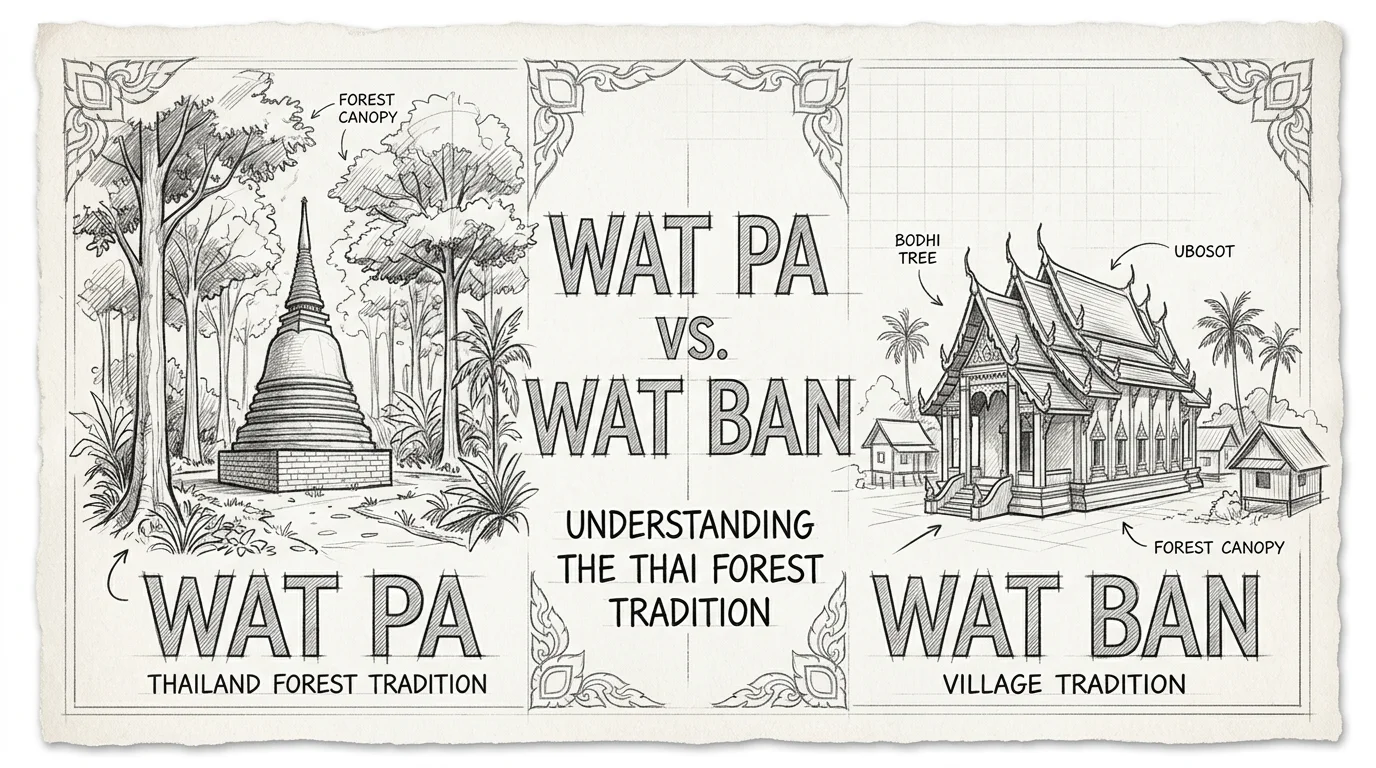
Most travelers to Thailand form their understanding of a Buddhist temple based on what they see in Bangkok or Chiang Mai: gleaming gold stupas, intricate glass mosaics, chanting monks, and a constant flow of tourists and locals making merit.
However, there is an entirely different world of Buddhism hidden in the dense jungles and quiet mountains of Thailand, particularly in the northeastern Isan region. This is the realm of the Thai Forest Tradition—a strict, ascetic movement that focuses heavily on intensive meditation and a return to the original lifestyle of the historical Buddha.
To truly understand Thai Theravada Buddhism, you must understand the deep cultural distinction between the two types of temples: Wat Ban and Wat Pa.
The Core Difference: Wat Ban vs. Wat Pa
In Thai, the word Wat means temple. The distinction comes down to location, purpose, and the daily life of the monastic community (the Sangha) residing there.
Wat Ban (Village or City Temples)
Ban translates to village or home. A Wat Ban is a community-centric temple. These are the beautifully decorated temples you see in populated areas. The monks here play a highly social role: they perform funerals, bless new homes, teach at local schools, and organize community festivals. While they meditate and study scriptures, their primary function is to serve the immediate spiritual and ceremonial needs of the local laypeople.
Wat Pa (Forest Monasteries)
Pa translates to forest. A Wat Pa is designed for seclusion. Stripped of ornate decorations, these monasteries are often just a collection of simple wooden huts (kutis) scattered through a forest, surrounding a modest open-air assembly hall. The monks here prioritize strict adherence to the monastic code (the Vinaya) and dedicate their lives to Vipassana (insight) meditation to achieve enlightenment.
Key Differences at a Glance
If you are trying to distinguish between the two, look for these fundamental contrasts:
Primary Focus: While village temples center on community service, local ceremonies, and scriptural study, forest monasteries are dedicated almost entirely to intensive meditation and asceticism.
Location: You will easily find a Wat Ban in the heart of cities, towns, and villages. In contrast, a Wat Pa is deliberately hidden away in remote jungles, mountains, or caves.
Architecture: The visual difference is striking. City temples feature colorful, highly ornate, large concrete structures. Forest monasteries embrace a rustic, minimalist aesthetic, often consisting of simple wooden dwellings that blend seamlessly into the natural environment.
Monastic Rules: Monks in both settings follow the standard 227 Theravada rules of conduct. However, forest monks generally adopt additional, highly disciplined ascetic practices to deepen their spiritual resolve.
The Revival of the Forest Tradition
The Thai Forest Tradition, as it is known today, is surprisingly modern. By the late 19th and early 20th centuries, mainstream Thai Buddhism had become highly institutionalized. Monks were moving to cities to study in universities, and intensive meditation was widely considered a lost art.
Two pioneering monks from the Isan region, Ajahn Sao Kantasilo and his legendary disciple Ajahn Mun Bhuridatta, changed everything. (Note: Ajahn is a Thai title of respect meaning "teacher").
Ajahn Mun believed that true realization could not be found in books or busy city temples. He took to the remote, tiger-infested jungles of Northeast Thailand, walking barefoot, living in caves, and facing his fears through relentless meditation. His profound teachings attracted followers, sparking a massive revival of ascetic monasticism that eventually spread worldwide.
Life in a Forest Monastery: The Dhutanga Practices
What makes Wat Pa monks so highly revered by Thai people is their strict adherence to the Dhutanga (tudong in Thai) practices. These are optional, severe ascetic rules allowed by the Buddha to help monks shake off attachments to comfort.
If you visit a Wat Pa, you will notice the daily routine is uncompromising:
One Meal a Day: Monks eat only once, usually around 8:00 AM, and fast for the rest of the day.
The Alms Bowl: All food consumed must be collected on the morning alms round (pindapata). Furthermore, sweet, savory, and dessert items are often mixed directly into the monk's single alms bowl to destroy the desire for fine tastes.
Living in the Wild: Monks live in isolated, single-room huts (kutis) without electricity or plumbing, dealing with heat, mosquitoes, and wild animals as objects of meditation.
Robes from Rags: Traditionally, forest monks wore robes made of discarded cloth, dyed with the heartwood of the jackfruit tree. This gives their robes a distinct, dark earthy-brown color, which sharply contrasts with the bright saffron worn by city monks.
How to Visit and Experience a Wat Pa
Visiting a Wat Pa is a profoundly peaceful experience, but it requires a different mindset than visiting a Wat Ban. These are not tourist attractions; they are active, silent training grounds for the mind.
Wat Pah Nanachat (The International Forest Monastery)
If you are an English speaker wanting to experience the Forest Tradition, your best starting point is Wat Pah Nanachat in Ubon Ratchathani. Founded in 1975 by Ajahn Chah (one of the most famous masters of the tradition) specifically to train foreign monks, the primary language spoken here is English.
They accept lay visitors who wish to stay and practice, provided you follow their strict daily schedule, which involves waking up at 3:00 AM, sweeping the forest paths, and hours of silent meditation.
Etiquette for Visitors
Silence is Golden: Keep conversations to an absolute minimum. If you must speak, whisper.
Dress Code: If you are visiting for the day, dress conservatively (shoulders and knees covered). If you are applying to stay overnight for a meditation retreat, you are strictly required to wear plain, loose-fitting white clothing.
Eating Etiquette: If you attend the morning meal offering, laypeople eat only after the monks have taken their share. It is considered a great privilege to eat the food blessed by the forest monks.
Do Not Wander Aimlessly: Stick to the public areas (the main sala or kitchen). Never wander into the forest where the monks' private kutis are located, as this interrupts their meditation.
The Thai Forest Tradition stands as a testament to the fact that the original, austere path of the Buddha is still actively walked today. Stepping into a Wat Pa offers a rare glimpse into a life stripped of modern distractions—a quiet rebellion of mindfulness in a noisy world.